
YAPPA-RI やっぱり
Meanings
A conversational, more emphatic form of YAHARI (やはり).
1. As expected; just as I thought; sure enough.
2. After considering alternatives, returning in the end to the choice or judgment you originally favored.
Examples
1. He hasn’t practiced, so I guess he’ll lose after all.
練習していないのだから、やっぱり負けるだろうね。
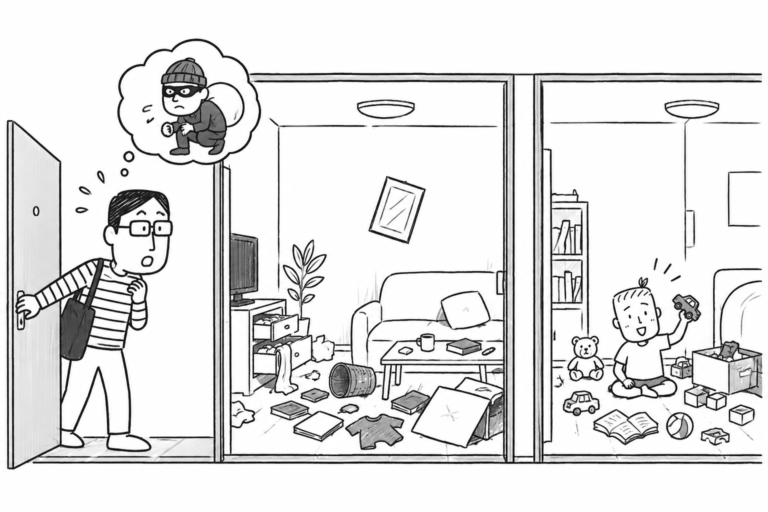
1. I thought he was hiding something, and sure enough, I found a test with a bad score at the bottom of his school bag.
何かを隠していると思ったら、やっぱり、点数の悪いテストがランドセルの底から出てきた。
2. When it comes to beer, I still think Japanese beer is the best.
ビールはやっぱり日本産にかぎる(日本産のビールが一番美味しくて好きだ)
2. Actually, forget the hamburger—I’ll have the curry after all.
ハンバーグじゃなくて、やっぱりカレーを食べる。
Dogmatic Opinion
YAPPA-RI is common in conversation; in more formal speech, especially when speaking to someone senior, YAHARI is often preferred. YAPPA is an even more casual shortened form, especially common among younger speakers.
The most typical use of YAPPA-RI is “just as I thought.” Behind the word there is usually either a prior expectation or a period of hesitation, followed by confirmation.
In sense 1, the pattern is roughly: expectation A → result A.
In sense 2: initial judgment A → alternative B → return to A.
For example, if you expected bread for breakfast and bread appears, you can react with YAPPA-RI: “Just as I thought.” In the second pattern, you may initially want bread, agree to cereal because everyone else chooses cereal, and then finally say, “YAPPA-RI, make mine bread.” You have returned to the choice you originally preferred.
Sometimes the return is less explicit. A person may first ask for cereal and then say, “YAPPA-RI, bread.” That can look like a simple change of mind, but it can also be understood as returning to what the person really wanted underneath the temporary choice.
YAPPA-RI can therefore function as a way of confirming that, among several possibilities, one option feels like the “right answer” or the choice that truly fits the speaker.
Some people also use YAPPA-RI habitually at the beginning of sentences with little concrete meaning. In such cases it can function almost like a conversational filler, somewhat like “you know” in English.
Proximate Expression
I knew it.
Told you.
On second thoughts
Unsurprisingly
Related Words
For Japanese Learners
YAPPA-RI has no single English equivalent. Depending on context, it may be as expected, I knew it, sure enough, after all, still, actually, or on second thought. “やっぱり雨が降った” can be “I knew it would rain” or “It rained, just as expected.” “いろいろ迷ったけど、やっぱりこれにする” can be “After all, I’ll go with this” or, in some contexts, “On second thought, I’ll choose this.” The common thread is a prior expectation, preference, or line of thought that is confirmed or returned to.