BASSA-RI ばっさり
Meanings
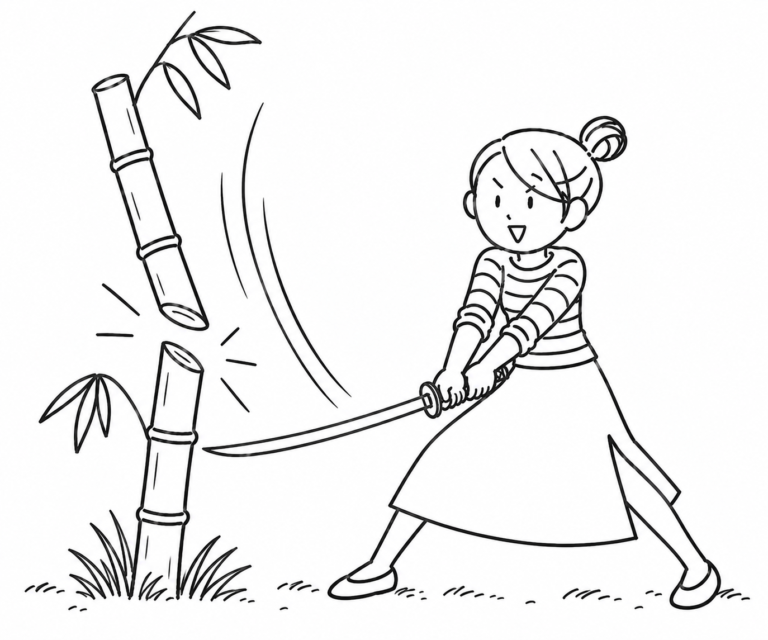
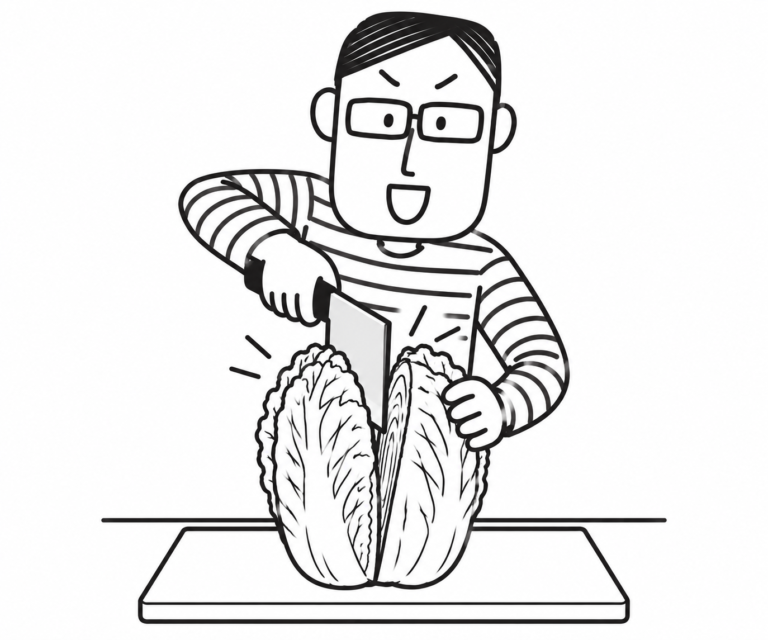
1. Describes cutting off or discarding a substantial amount boldly and decisively; by extension, making a large, uncompromising reduction.
2. Describes a formerly gathered mass of things, especially papers, coming apart and falling in a disorderly way.
Examples
1. I wanted a change, so I had my long hair cut right down to a bob.
気分を変えたかったので、ロングヘアーをばっさり切ってボブスタイルにした。
1. I dismissed his pointless argument outright.
つまらぬ意見をばっさりと斬り捨ててやった。
1. The budget that existed until last year was drastically cut this year.
昨年まであった思いやり予算が、今年はばっさりと削減された。
1. I asked the gardener to cut the branches back hard.
植木屋に頼んで、ばっさりと枝を切ってもらった。
2. A whole bundle of papers spilled out of the file.
ファイルから書類がばっさりと落ちてしまった。
Dogmatic Opinion
Speed is not the most important part of BASSA-RI. What matters is boldness and the scale of the cut.
If a woman with long hair has only one centimeter cut off, I would not call that BASSA-RI, even if the scissors make the cut quickly in a single stroke. There needs to be a substantial, decisive reduction.
In sense 2, I imagine papers that had been held together as a booklet, book, or bundle breaking apart and scattering with a BASA-BASA kind of rustling sound. A floor covered randomly with Lego pieces—as happens in my house—would not be BASSA-RI.
The cutting image also extends metaphorically to writing, budgets, and similar things. It means cutting away a large amount rather than merely tidying or trimming a little.
Related Words
For Japanese Learners
For hair or branches, English may use cut a lot off, chop off, cut right back, or cut drastically. For budgets or text, slash, drastically cut, or cut out a large section may be natural. BASSA-RI emphasizes a bold, substantial reduction, not merely speed.