BAKKA-RI ばっかり
Meanings
A casual spoken form of BAKARI (ばかり).
1. Expresses restriction or repetition: only, nothing but, or doing the same kind of thing repeatedly.
2. Indicates that an action was completed only a short time ago: just did something.
Examples
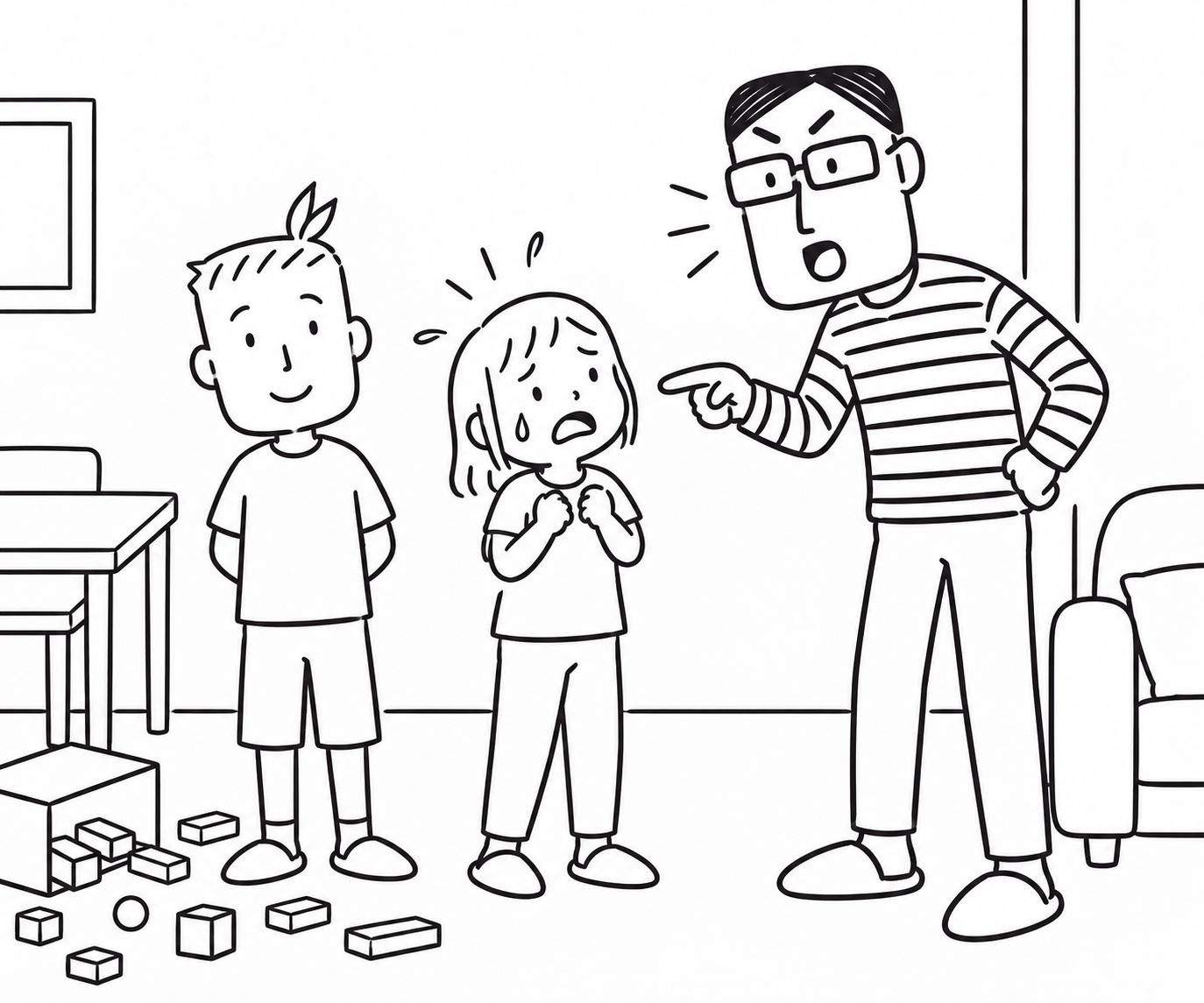
1. My brother never gets scolded, but I’m the one who gets scolded all the time.
お兄ちゃんは怒られないのに、私ばっかり怒られる。
2. She only just finished dinner, and she’s already opening a bag of snacks.
今ご飯を食べ終わったばっかりなのに、もうお菓子の袋を開けている。
Dogmatic Opinion
BAKKA-RI is colloquial, but it is not freely interchangeable with BAKARI in every construction. There are many situations in which only BAKARI sounds appropriate.
In sense 1, BAKKA-RI can carry a speaker’s complaint that one person, thing, or activity is being singled out repeatedly. It fits especially well when pointing out an imbalance in how the speaker and someone close to them are treated—for example, favoritism, unfair blame, or one person repeatedly receiving better or worse treatment.
This is grammatical vocabulary rather than a typical sound-symbolic mimetic word, but the contracted BAKKA-RI form is extremely common in casual Japanese.
For Japanese Learners
For sense 1, English may use only, nothing but, always, or keep doing, depending on the sentence. “遊んでばっかりいる” can be “He does nothing but play” or “He’s always playing around.” For sense 2, just is usually natural: “今来たばっかり” = “I just got here.” Because BAKKA-RI is strongly conversational, learners will hear it constantly in everyday speech.