ASSA-RI あっさり
Meanings
1. Describes a person, attitude, flavor, color, design, or form that is light, mild, simple, or not overly rich or heavy.
2. Describes something happening or being completed surprisingly easily, without much difficulty.
Examples
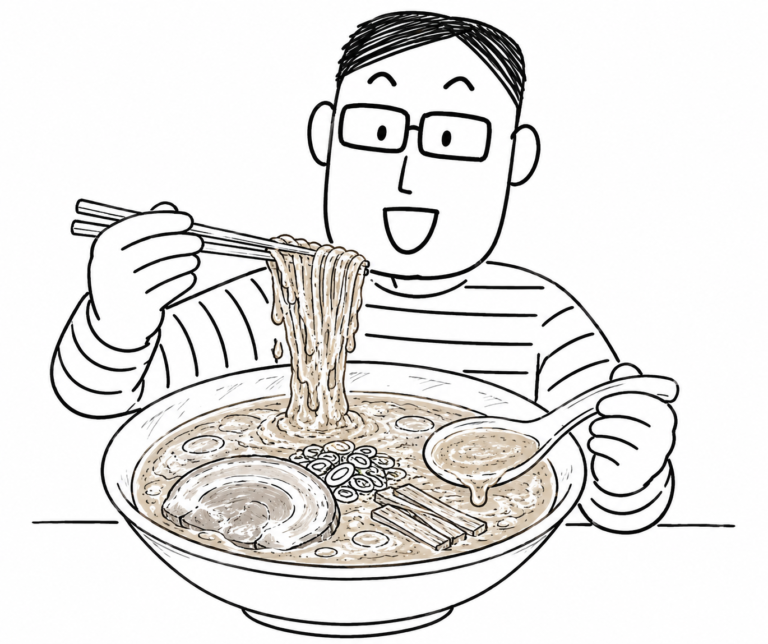
1. This ramen has a light, mild salt-based flavor.
このラーメンはあっさりした塩味だ。
1. This poster has a simple, understated design.
このポスターのデザインはあっさりしたものだ。
1. My younger brother is easygoing and doesn’t hold grudges.
弟は性格があっさりしている。
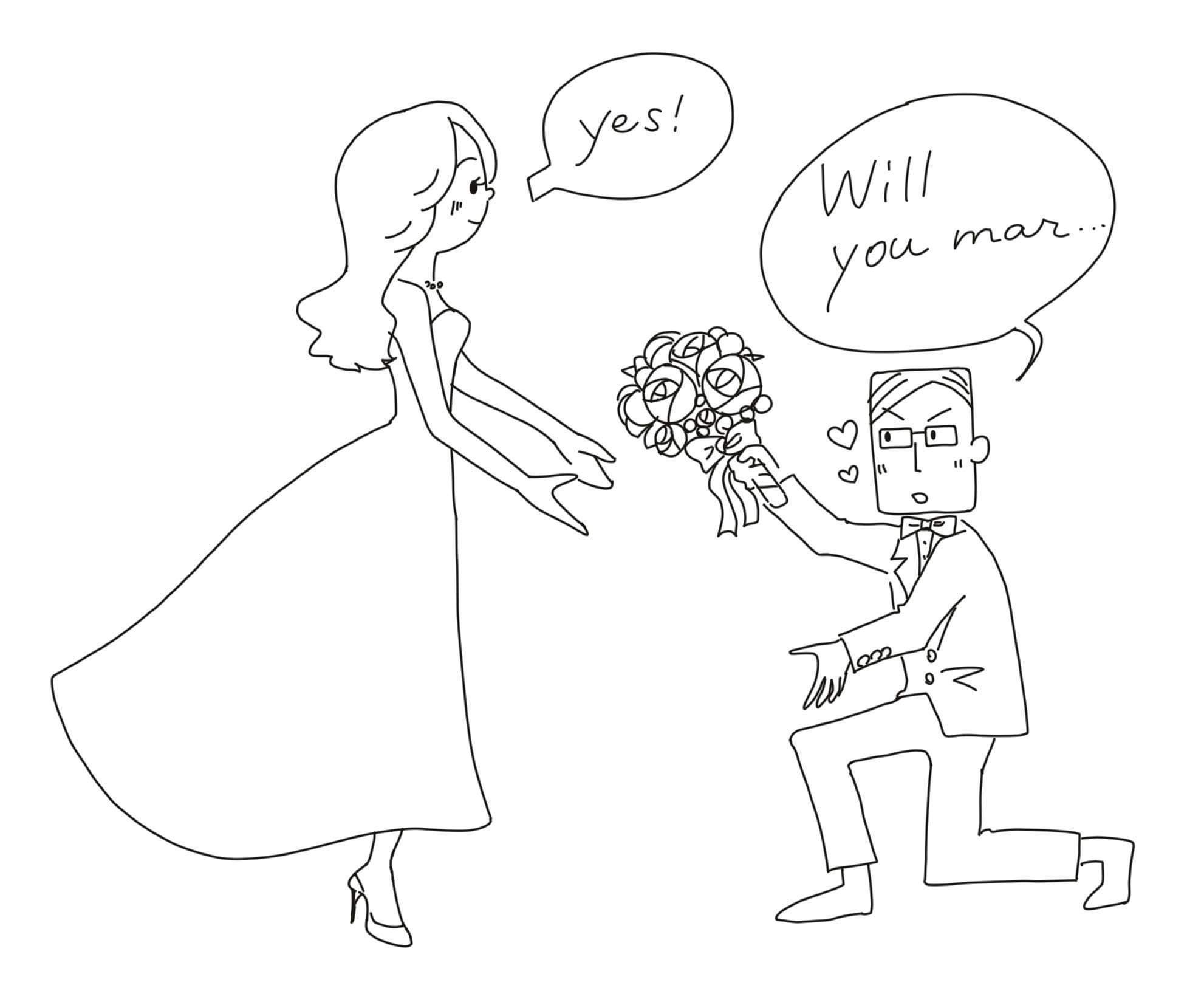
2. I proposed, expecting I might be rejected, but she said yes before I had even finished asking.
だめ元でプロポーズしたら、言い終わらないうちにあっさりOKだった。
2. He lost surprisingly easily.
彼はあっさりと負けた。
2. Even though I broke something important, they forgave me without making a fuss.
大切なものを壊してしまったのに、あっさり許してくれた。
2. He quit smoking with surprising ease after years of being a smoker.
長年吸っていたタバコをあっさりやめた。
Dogmatic Opinion
In sense 1, ASSA-RI is especially common when talking about food. It suggests restrained seasoning or oil, a flavor that is not rich or overpowering, and often a lightness that does not linger. The same basic image can extend to colors, design, and personality. A person with an ASSA-RI personality does not dwell on things, hold grudges, or come back later to complain.
Sense 2 often carries an element of surprise: something turns out to be much easier than expected. You may have expected rejection, a close contest, anger, or difficulty, yet the matter ends quickly and without much trouble. For example, saying that someone solved a first-grade problem ASSA-RI is more meaningful if that person is a kindergartener than if the person is an adult.
So in sense 2, ASSA-RI can imply not merely “easily,” but “more easily than I expected.”
Proximate Expression
① plainly, simply, lightly
② easily, readily, without difficulty
Related Words


For Japanese Learners
There is no single English word that covers every use of ASSA-RI. For food, light or mild is often natural; for design, simple or understated; for personality, easygoing, straightforward, or not one to hold grudges. When an event ends more easily than expected, English often uses easily, without much difficulty, surprisingly easily, or simply rewrites the sentence to express the speaker’s surprise.