ZAKKU-RI ざっくり
Meanings
1. Describes something approximately or in broad terms, without fine detail.
2. Describes cutting or splitting something forcefully and deeply; also a deep, rough-looking cut or split.
3. Describes fabric or knitting with a coarse, loose, substantial texture.
Examples
1. Just give me a rough construction-cost estimate to the nearest million yen.
工事の費用をざっくり100万円単位でいいので教えてください。
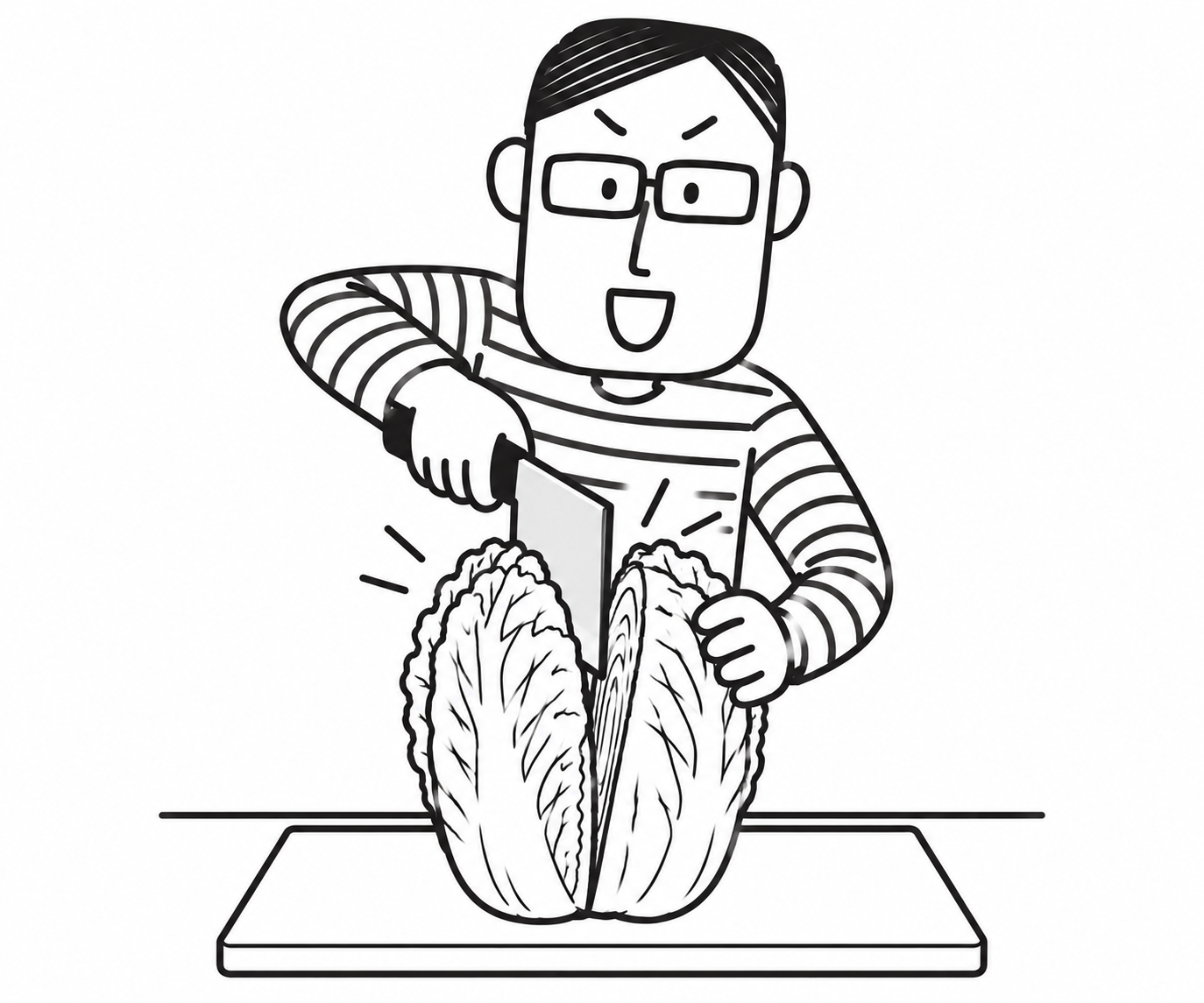
2. I cut the Chinese cabbage and watermelon into large pieces with a big knife.
大きな包丁で、白菜やスイカをざっくり切った。
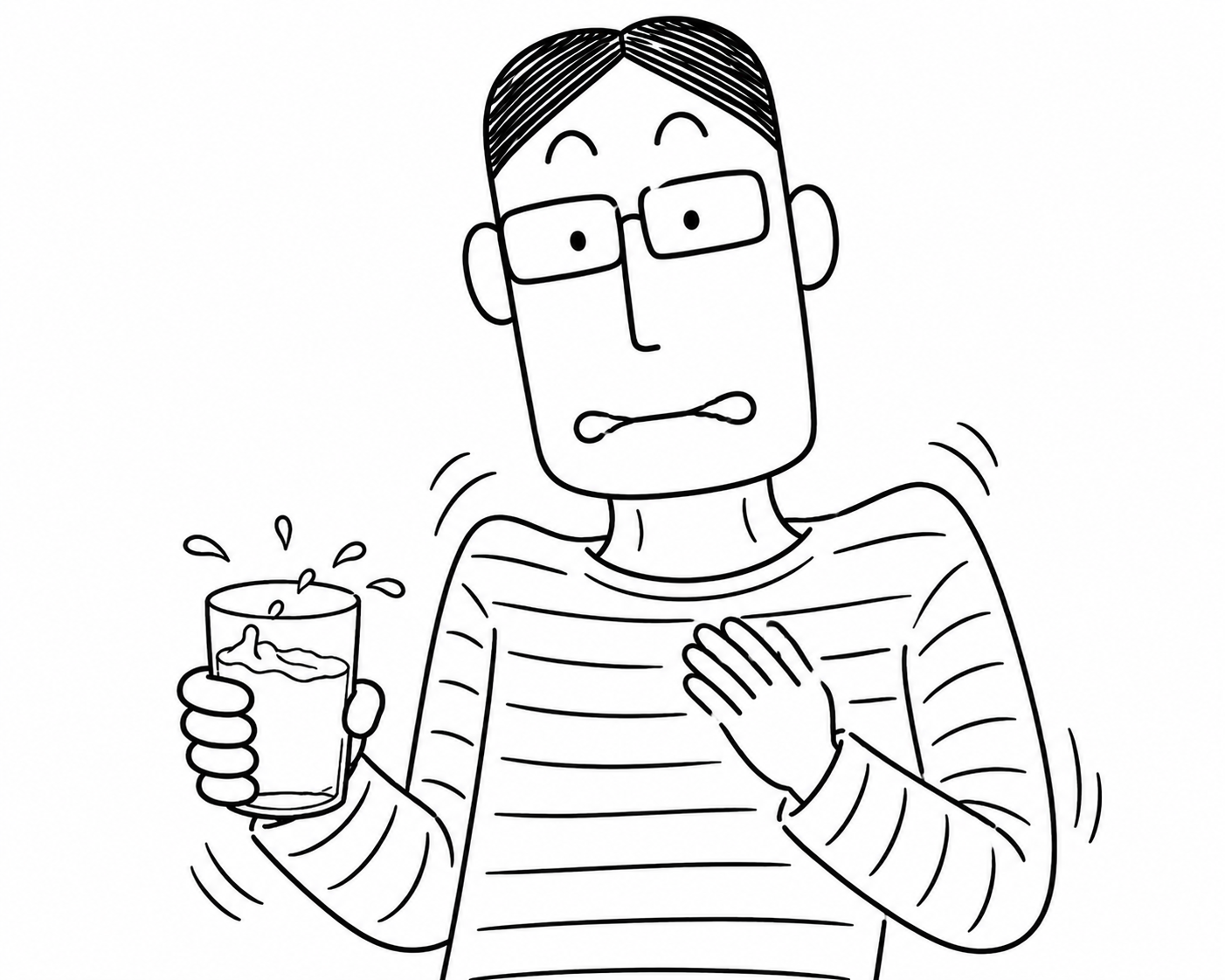
2. While chopping ingredients, I cut deeply into the tip of my finger with the knife.
みじん切りをしていたら、包丁で指先をざっくり切ってしまった。
3. Chunky knits were fashionable this winter.
この冬はざっくりニットが流行した。
Dogmatic Opinion
I suspect that the now-common use of ZAKKU-RI meaning “roughly” or “approximately” may have been popularized by copywriter Shigesato Itoi and Hobonichi—though that is only my guess.
The idea is: accuracy and fine detail take time, so when speed matters, give me the broad answer first. “Just tell me the estimate ZAKKU-RI.”
When I hear the word without context, another image that comes to mind is a large, juicy vegetable such as a Chinese cabbage or watermelon being cut decisively in two with a reasonably large blade. Cutting it with a tiny paring knife would not feel ZAKKU-RI to me. Nor do I strongly imagine dividing it into three or more pieces.
If a salesperson told me, “ZAKKU-RI speaking, your choices are A, B, or C,” I would be annoyed. If you are going to say ZAKKU-RI, give me something broad enough to be “A or B.”
Sense 3 belongs to the same family of impressions. ZAKKU-RI rejects fineness, delicacy, and smallness. It favors broadness, coarseness, substantial size, and an appropriately loose lack of precision.
Proximate Expression
coarse cloth
approximately
roughly
vigorously
Related Words
For Japanese Learners
For sense 1, roughly, approximately, broadly speaking, or in broad strokes. For sense 2, cut deeply, chop through, or make a deep cut. For fabric, chunky, coarse, or loosely knit. The modern “rough overview” use is extremely common in business and conversation.